history of delhi 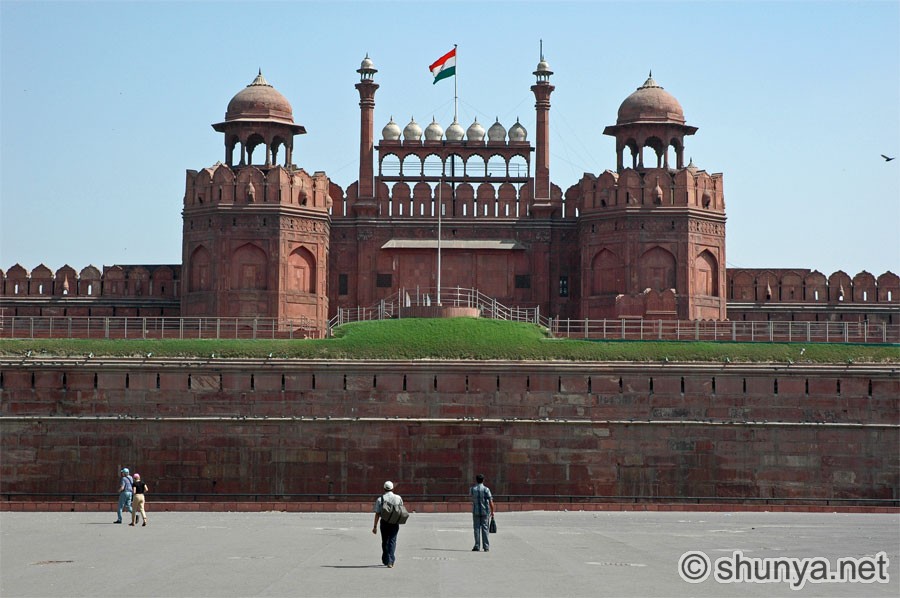 http://newinformation55.blogspot.com The Indian capital city of Delhi has a long history, and has been an important political centre of India as the capital of several empires. Much of Delhi's ancient history finds no record and this may be regarded as a lost period of its history. Extensive coverage of Delhi's history begins with the onset of the Delhi Sultanate in the 12th century. Since then, Delhi has been the centre of a succession of mighty empires and powerful kingdoms, making Delhi one of the longest serving Capitals and one of the oldest inhabited cities in the world.[1][2] It is considered to be a city built, destroyed and rebuilt several times, storyutsiders who successfully invaded the Indian Subcontinent would ransack the existing capital city in Delhi, and those who came to conquer and stay would be so impressed by the city's strategic location as to make it their capital and rebuild it in their own way.[3][4] The core of Delhi's tangible heritage is Hindu, Islamic (spanning over seven centuries of Islamic rule over the city) with some British-era architecture in Lutyens' Delhi dating to theBritish rule in India.
Significant prehistoric sites in Delhi include Anangpur (in the Badarpur region), as well as Harappan excavations near Narela and Nand Nagari.[5]
References to Delhi's history in ancient literature are based on myths and legends. According to the Hindu epic Mahabharata, a city called Indraprastha, “City of the God Indra”, was the capital of the Pandavas. There is a strong belief that Purana Qila was built over the site of ancient Indraprastha. Northern Black Polished Ware (c700-200 BC) have been excavated at the site, and pieces of Painted Grey Ware were found on the surface, suggesting an even older settlement, possibly going back to ca. 1000 B.C.[5]
In 1966, an inscription of the Mauryan Emperor Ashoka (273-236 BC) was discovered near Srinivaspur. Two sandstone pillars inscribed with the edicts of Ashoka were brought to by Firuz Shah Tughluq in the 14th century. The famous Iron pillar near the Qutub Minar was commissioned by the emperor Kumara Gupta I of the Gupta dynasty (320-540) and transplanted to Delhi during the 10th century.
Contents
[hide]Cities of Delhi[edit]

It is popularly said that Delhi was the site for a total of seven different cities between 3000 B.C. and the 17th century A.D., although taking smaller towns and strongholds into account, as many as 15 settlements can be identified. All the earlier locations of Delhi fall within an area commonly called the 'Delhi Triangle,' bounded on the south and the west by the Aravalli Range, known as the Delhi Ridge, and to the east by the Yamuna River.[6][7]
- Indraprastha, supposedly built by the Pandavas.
- Surajkund (Anangpur), Tomar city dating from the 9th or 10th century, where a large masonry tank can be found.
- Lalkot, built ca. 1052 A.D. by the Tomara ruler, Anangpal. In ca. 1180 A.D. Prithviraj Chauhan extended and fortified it as a defence against Muslim invaders; the city then became known as Qila Rai Pithora. This area, now called asMehrauli, was also the seat of the Mamluk (Slave) dynasty.
- Siri, first established as a camp for protection against invading Mongols by Alauddin Khilji, and fortified in about ca. 1303 A.D.
- Tughluqabad, built by Ghiyasuddin Tughluq in ca. 1320 A.D. A subsidiary fort Adilabad was built by his sonMuhammad bin Tughlaq in ca. 1325 A.D.
- Jahanpanah, Refuge of the World, name given to the area enclosed by walling-in of the suburbs between Qila Rai Pithora and Siri, built by Muhammad bin Tughluq in ca. 1325 A.D.
- Ferozabad, built by Firuz Shah Tughluq in ca. 1354 A.D.; all that remains is the palace, known as Feroz Shah Kotla. Feroz Shah’s building activity indicates that the suburbs were still occupied; major mosques were built inside Jahanpanah (Khirki and Begumpur) and Nizamuddin; and the area around Khilji reservoir Hauz Khas was developed.
- Dinpanah built by Humayun and Shergarh built by Sher Shah Suri, both in the area near the speculated site of the legendary Indraprastha (1538–1545).
- Shahjahanabad, the walled city built by Shah Jahan from 1638 to 1649, containing the Lal Qila and the Chandni Chowk. It was the capital of the Mughal Empire during Shah Jahan's reign. It is presently referred to as "Old Delhi".
- Lutyens' Delhi or New Delhi, the city built by the British on the south-west, declared Capital on 12 December 1911. On 12 December 2011 New Delhi celebrated 100 years of serving as India's National Capital.[8]

Modern Delhi, referred to as 'Dilli' locally, derived from its historical name Dhili, is an amalgam all of the above. Officially, however, only seven of the above-mentioned settlements are recognized.[9]as historical cites with distinct identities and indigenous heritage: Qila Rai Pithora, Mehrauli, Siri,Tughlaqabad, Ferozabad, Dinpanah and Shahjahanabad.
The rest are not officially identified as Cities of Delhi because of some specific reasons.
- Indraprastha, the legendary Ancient City is believed to have been established 5000 years ago (c. 2800 BC), as per the ancient Indian text- the Mahabharata. Though very much a part of India'svery Ancient history, it lacks any tangible evidence to say without doubt that it existed. Archaeological evidence exists, but in such scarcity as be inconclusive. As acknowledged by Britishhistorian Michael Wood in his BBC documentary The Story of India,[10] the excavated ceramic pottery from the site of today's Purana Qila in Delhi and the excavated layers of the ancient city seem to match what the verses of the Mahabharata indicate. More possible evidence in its favour is the existence of a village named Indraprastha very close to the Purana Qila that was destroyed by the British during the construction of Lutyens' Delhi.[11]
- Jahanpanah is not considered as a City of Delhi because it is very much in ruins and too diffused now to be considered a distinct city. Moreover, sections of the city still standing are now counted in Siri or Mehrauli.
- Lodi Complex is not counted as a distinct city because their architectures are too few to be counted as a whole city. The Sayyid and Lodhi dynasties that followed the Tughlak dynasty were far more concerned with restoring stability than patronisation of arts or architecture. Tombs erected in the honour of the rulers are the only monuments of these times and these are scattered all over current South and Central Delhis.[12]
- New Delhi, the Capital city of modern India is also not counted as a City of Delhi because the structures of those times are still in use as government buildings. So there seems no such thing as "history" about it.

Once I was on golden triangle tour 3 days and at this tour I found various things about Delhi. All those things are really very amazing.
ReplyDeleteGrafisk designtjenester Oslo
ReplyDeleteMagasin design Oslo
Annonsedesign Oslo
Annonse design Oslo
Grafisk design Oslo
Wordpress design Oslo
Grafisk designer Oslo
Grafisk designer Oslo